Why better car audio starts with defining the goal—not choosing the equipment.
Someone walks into a shop with a new pair of speakers and a seemingly simple request:
“I want my stereo to sound better.”
At first glance, the solution seems obvious. Remove the factory speakers, install the better ones, and the stereo should sound better.
Except that isn’t necessarily how modern car audio works.
You can purchase a $1,000 pair of speakers and install them into an application that never gives them the opportunity to perform like $1,000 speakers. In some modern vehicles, replacing the factory speakers without understanding the system around them can actually make the listening experience worse.
That’s why, at Experience Auto, the first question isn’t “Which speakers do you want?”
It’s:
What does “better” mean to you?
“Better” Isn’t a Specification
This is part of the mysticism of car audio.
Everyone recognizes better sound when they hear it, but “better” means something different to almost everyone.
One person wants more output. Their factory system simply doesn’t get loud enough.
Another doesn’t care about volume. They want detail. They want to hear the breath before a vocal, the texture of a guitar string, or something buried in a recording they’ve listened to a hundred times and never noticed before.
Someone else wants the music to stop sounding like it’s coming from speakers scattered throughout a vehicle. They want a believable soundstage in front of them—the sensation that the performance exists beyond the dashboard rather than inside the doors.
All three customers asked for better sound.
They’re describing three different objectives.
It isn’t the customer’s responsibility to know the technical terminology for what they’re hearing—or what they’re missing. They shouldn’t need to understand frequency response, phase, staging, imaging, equalization or digital signal processing before they’re allowed to buy a good audio system.
That’s our job.
Our first responsibility is to extract what “better” means to that individual. That may happen through conversation, listening demonstrations, a demo vehicle, or simply understanding what they like and dislike about the system they have now.
Once we understand the experience we’re trying to create, then we can begin talking about equipment.
The Product Comes After the Goal
This reverses the way car audio is often sold.
Instead of beginning with a speaker, amplifier or DSP and asking what we can do with it, we begin with the desired outcome and ask:
What will it take to accomplish that in this vehicle?
The vehicle matters.
The existing audio system matters.
Speaker locations matter.
Available space matters.
The factory source and amplifier matter.
The client’s listening preferences matter.
And, yes, the budget matters.
Only after understanding those variables does selecting equipment really make sense.
Products are tools. Our responsibility is knowing which tools are appropriate for the objective and the platform we’re working with.
A more expensive tool doesn’t automatically create a better result.
Modern Vehicles Changed the Equation
There was a time when upgrading a car stereo could be relatively straightforward. Replace the radio, replace the speakers, add an amplifier and build from there.
Modern vehicles have complicated that equation considerably.
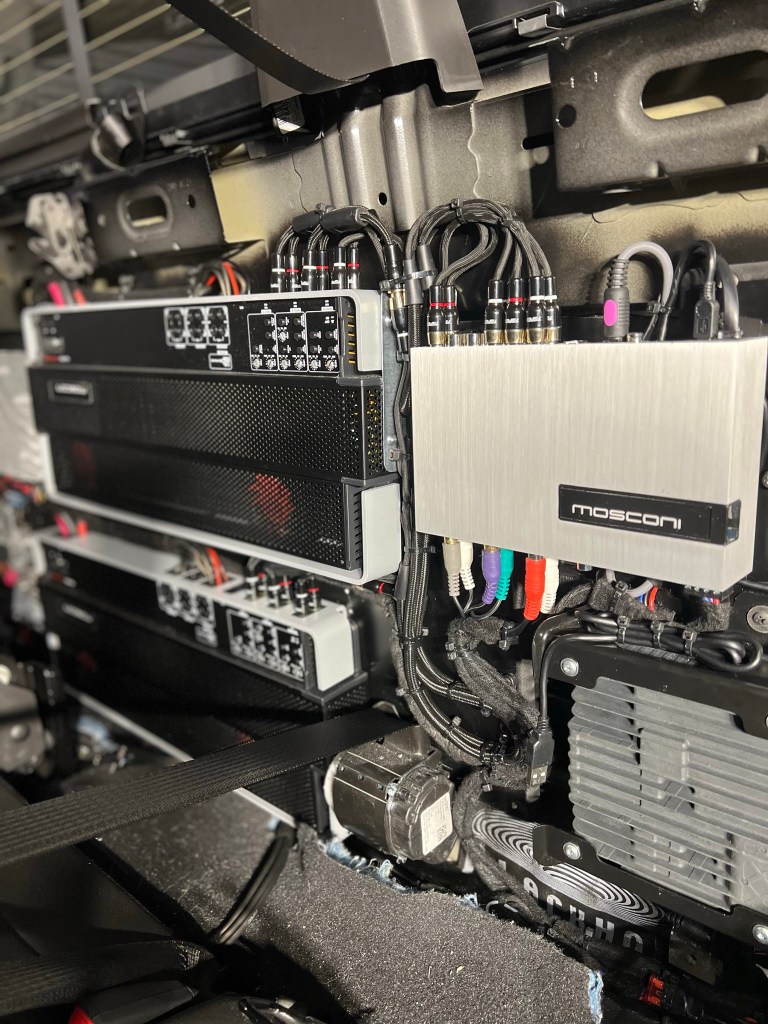
Today’s factory audio systems may incorporate dedicated amplification, active crossovers, equalization, time correction, all-pass filters, dynamic processing, bass roll-off, bandwidth-limited signals and other strategies designed around the specific speakers and locations installed by the manufacturer.
That means the factory speaker we’re looking at is only one component of a much larger system.
Simply replacing it doesn’t necessarily correct what we dislike about the system.
Worse, installing a different speaker without understanding what the factory system is doing can introduce an entirely new set of problems.
That’s why proper integration has become such an important part of modern car audio.
We need to understand what is happening to the signal before it ever reaches the speaker.
The Art of Installation
Even after we’ve selected the right equipment, we’re only halfway there.
I refer to the next part as the art of installation.
In high-end home audio, nobody expects to purchase a serious pair of loudspeakers, randomly place them somewhere in a room and automatically experience everything those speakers are capable of producing.
We consider placement. We consider the room. We consider acoustic treatment. We consider amplification, source material and the environment in which those speakers are being asked to perform.
A vehicle deserves the same consideration.
The question isn’t simply:
What can this product do for us?
It’s also:
What can we do for this product within the environment the vehicle gives us?
That distinction matters.
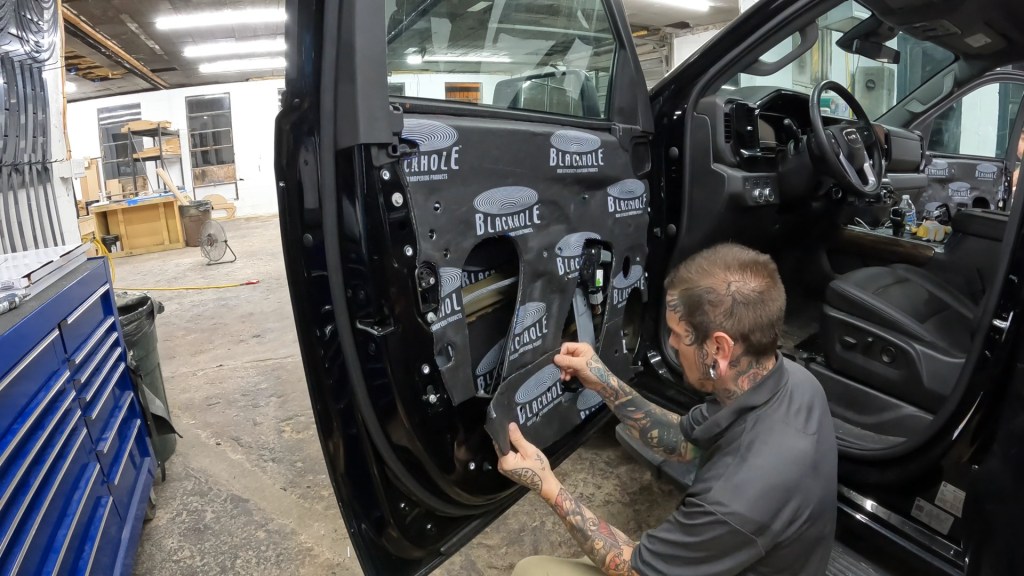
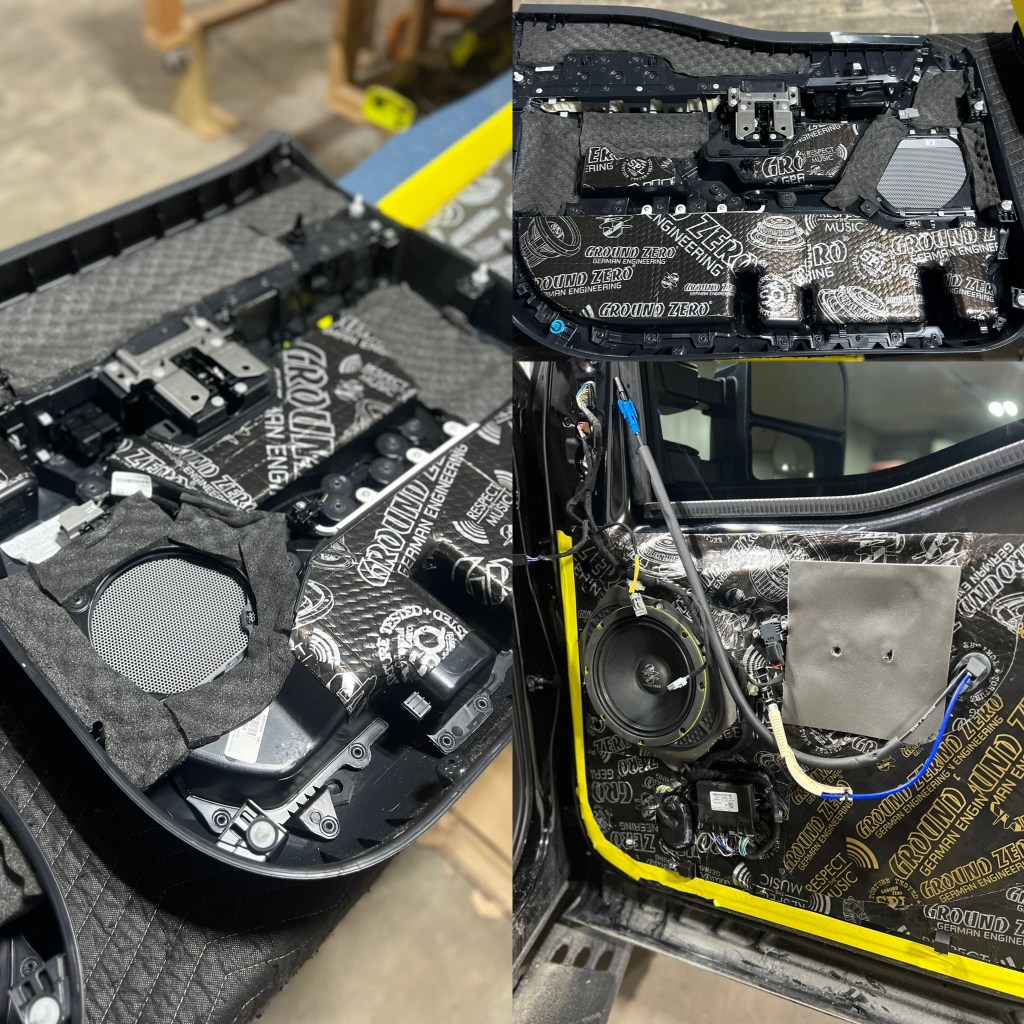
A properly designed speaker adapter doesn’t simply hold a speaker in a hole. It establishes a rigid mounting surface, properly positions the driver and allows it to couple correctly to the vehicle.
Gasketing and sealing matter because we want the acoustic energy produced by the speaker directed through the intended opening rather than disappearing behind a door panel.
Managing the rear wave matters.
Controlling panel resonance matters.
Acoustic treatment matters.
Even something as seemingly insignificant as wrapping a wiring harness in closed-cell foam can matter when the alternative is allowing two hard surfaces to contact one another and create a buzz or rattle after the vehicle goes back together.
We may use constrained-layer damping material to control resonant panels. We may use absorptive materials such as hydrophobic melamine foam to address unwanted higher-frequency energy. We may identify and correct mechanical or acoustic problems the vehicle introduces before asking the speaker to overcome them.
Most of those details will never be seen by the vehicle owner.
They will be heard.
That’s the art of installation.
Sometimes the Better Speaker Upgrade Isn’t a Speaker Upgrade
Consider a newer Ford F-150.
The factory front door speaker may not look particularly impressive. It’s an inexpensive 6×9-inch driver.
But look at how Ford installed it.
The speaker occupies a vehicle-specific footprint. It’s spaced outward from the inner door structure. A foam gasket couples it to the back of the door panel so the acoustic energy from that inexpensive driver is directed through the factory grille.
The speaker itself may be inexpensive.
The application isn’t accidental.
Now imagine replacing it with a $99 pair of aftermarket speakers.
Doing the job properly may require vehicle-specific adapters, gasketing, acoustic treatment and installation labor. Suddenly a $99 product can become several hundred dollars of completed installation.
There is nothing inherently wrong with that. In fact, those details are exactly what allow the replacement speakers to perform correctly.
But here’s the important question:
Did replacing those speakers address the reason the customer disliked the stereo in the first place?
Maybe not.
The factory system may be altering the signal before it ever reaches those speakers. Perhaps there’s aggressive equalization. Perhaps bandwidth is restricted. Perhaps channels have different levels or timing. Perhaps bass is progressively reduced as volume increases to protect the factory drivers.
Installing better speakers doesn’t inherently solve any of those problems.
This is one reason a DSP amplifier can sometimes be a more meaningful first upgrade than replacing the speakers.
Fix the Foundation First
With proper measurement and integration, a DSP-equipped amplifier gives us an opportunity to understand the factory system and build a better foundation.
We can analyze what the vehicle is providing, determine what processing we’re dealing with, establish appropriate amplification and use digital signal processing to create the response we’re actually trying to achieve.
And sometimes we can initially accomplish that while retaining factory speakers.
That doesn’t mean factory speakers are superior to quality aftermarket drivers.
It means we’re addressing the system in the appropriate order.
Once that foundation exists, the vehicle is also better prepared for the next stage.
Now we have aftermarket amplification available. We understand the signal architecture. We’ve established the platform. When it becomes appropriate to install better speakers, we can allocate the time and budget necessary to install them properly—and actually take advantage of what they’re capable of doing.
That’s a very different approach from replacing parts until something sounds better.
Better Sound Is the Result
At Experience Auto, we don’t believe a system should be defined by how many aftermarket components it contains or how much those components cost.
It should be defined by the result.
That starts with understanding the vehicle.
It requires understanding the technology.
It requires understanding the installation.
But before any of that, it requires understanding the person who’s going to sit in the driver’s seat and listen to it.
Because “better” isn’t a product.
It’s an experience we’re trying to create.
And until we understand what that experience means to you, we haven’t earned the right to start choosing the equipment.
Scott Miller
Owner / Integration Specialist
Experience Auto
